After six weeks in Bali, I was eager to reach my final destination before heading home. This was my first time travelling alone outside Europe. I had imagined magnificent temples, but no research could have prepared me for what awaited.
I sat comfortably in the back of a fancy tourist taxi. The time had finally arrived. Endless rice paddies sped by as a gentle breeze floated over my face. But there was little time to get lost in a reverie; the driver had his own stories to tell.
As I stepped out, aromas of sweet herbs, tangy fish, and lime zest filled my lungs. Pavements refracted the luminescent glow of fairy lights that proudly decorated the streets. Being my ‘home’ for the following seven weeks, I wondered: will this become an adventure beyond my imagination, or will I feel lost?


The first impressions:
I had come to Siem Reap because I had found a volunteering placement with a local NGO. As it aligned with my skills and their communication was very transparent, it was unlikely to fall into the common pitfalls of voluntourism.
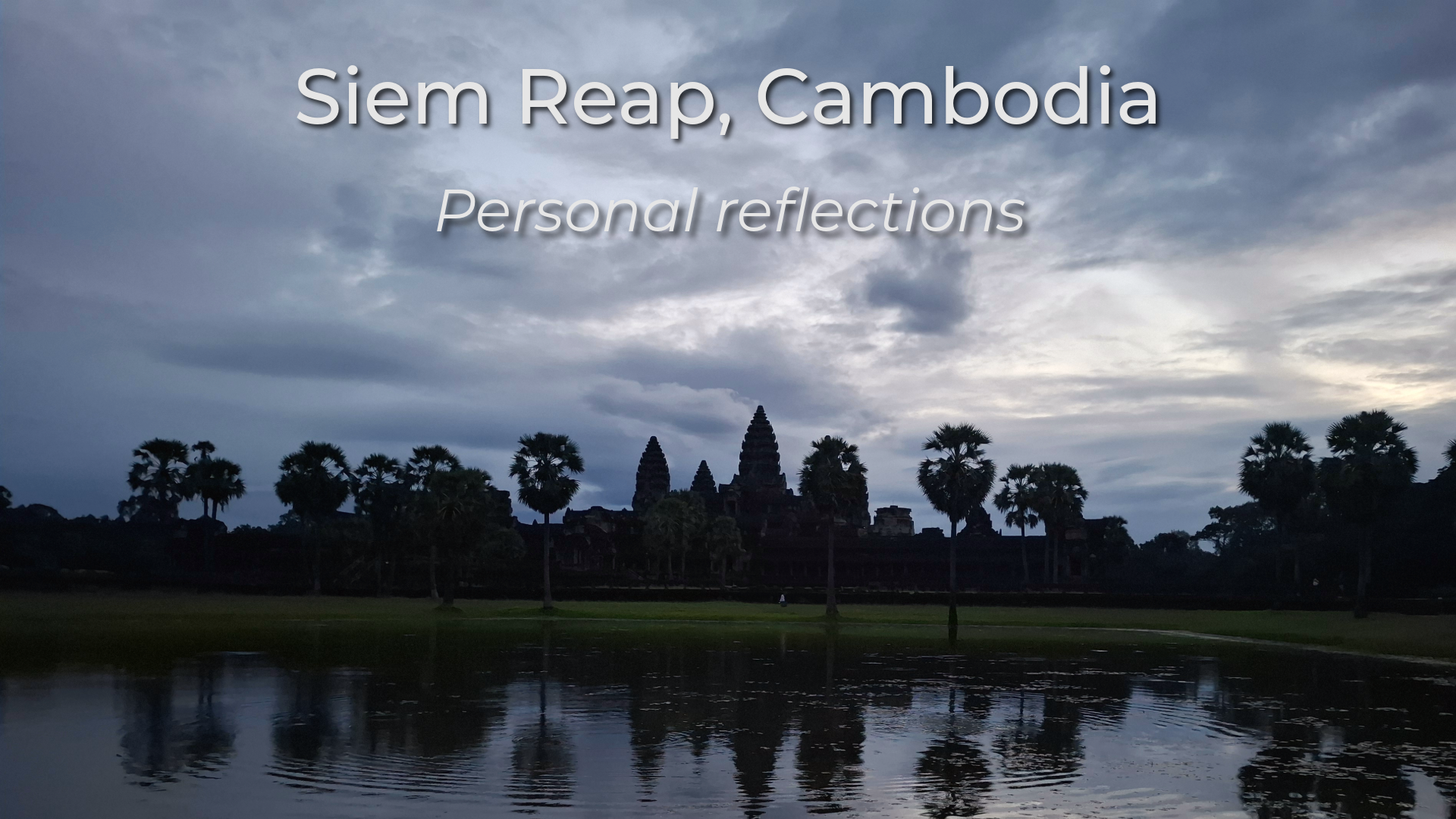
As the mysterious allure prevailed, the following items on my to-do list were visiting Angkor Wat and heading to Pub Street. Angkor Wat mightily loomed through the intertwining trees as the sun gradually rose from the twilight sky. The evening was spent knocking back glitter-coated, amethyst cocktails, fuelling hours of dancing on a floor that felt ablaze amidst the ethereal glow of the crowded room. Sometimes it is okay to act like a tourist, knowing that the real learning would come later.

The best kind of travel comes from listening to others:
Life can surprise us with profound moments so emotional we feel ‘funny’ for hours. That is how I felt after visiting the NGO. The organisation offered university scholarships, workshops, and other support. Opportunities we take for granted are life-changing for those who thought them unreachable.
I often had lunch with members of the organisation’s staff. They shared stories about their culture, experiences, and home lives. I learned much more from others whilst volunteering abroad than they learned from me.
We still don’t realise just how lucky we are:
Who remembers geography lessons about rural villages abroad? Half the children didn’t attend school. Many would never know what it’s like to leave their town. Even fetching water was a challenge. At first, this hit hard. But as time went on, I became quite desensitised.
I could never have guessed that a simple, touristy bucket list item would become pivotal. Booking a tour of the floating village seemed typical, yet two moments during the visit moved me far more than any picturesque river valley could.
As I stared agape at a herd of bulls lining up at the fence to greet me, the guide began discussing the livelihoods of teenagers in remote areas. Many drank and doom-scrolled the days away, with scant alternatives available to pass the time. It didn’t sound entirely dissimilar to the lives of some young people in the UK when access to opportunities is limited. Yet I was still stupefied — because the contrast with the unwavering drive of the students at the NGO could not have been more stark. But what else can be expected when nothing’s within reach?
Later, rice wine had managed to bypass my digestive system and instead immediately permeate into my bloodstream. I was pointed towards a school, perched like a hermit at a corner of the street. I could feel tears brimming in my eyes as I learned that the school had remained empty for months because of insufficient funding. The final sighting was a football, used, loved, bruised, and battered. Yet it still brightly bounced along the street, knowing that children would soon return to their worn companion. It was clear that when Cambodians got something, they would use it and cherish it. Be it something to pass the time, or higher education.

Kind people teach you that borders should never divide:
It became clear Cambodians value people, not just positions. Their sense of community extends beyond themselves. Friends, servers, or strangers willingly help, invite, or advise. Borders and backgrounds can divide, but they can’t erase our shared humility.
Some may make utterances about how people can appear ‘happy’ when material goods are scarce. But learning about the realities many face, there is a strong distinction between happiness and friendliness. The fact that people seem ‘happy’ even though ‘they have so little’ is never cute. It’s unjust.
Should you visit Cambodia?
Not one local had made any remark about traffic, which is the usual commentary when someone politely hints that tourism is putting some strain on the community. Instead, locals repeatedly expressed that they wanted more tourists, since Cambodia’s tourist numbers didn’t fully recover after COVID. When other travellers and I made positive comments about Cambodia or when it was clear we were enjoying ourselves, the locals showed pride. And why wouldn’t they?
From the majesty and intricacy of Angkor Wat and the charm of the night markets, to the warmth and resilience of the people, visiting Siem Reap left a lasting mark on me. Not only did I have a fantastic time, but I learned more than I could have ever imagined.

Personal reflections:
I need to remind myself to be grateful for my education and for the freedom in my life. I should also appreciate having a warm home and food I enjoy. Simple things are complicated for those who can’t take anything for granted. Maybe I should start being kinder to neighbours, fellow travellers, or visitors. How welcome people feel has a great impact on their experiences. If people are kind to me abroad, I should make more of an effort myself.
Have any of your travels made a lasting impact on your perceptions? If so, I would be interested in hearing about it in the comments.
Finally, for more travel insights, guides, and educational posts, please subscribe to ensure you don’t miss out on any future content.


Leave a Reply to pedmar10Cancel reply