

- Why sustainable businesses
- How to easily find sustainable businesses on your travels
- Sustainable places to stay
- Responsible Tours and Learning Experiences
Why sustainable businesses?
Have you thought about where your money goes after spending it abroad?
When people say that you ‘vote with your wallet,’ it may sound dramatic.
The counterargument is that locals benefit from increased jobs, but with poor pay and few opportunities for local managers, isn’t it time to ask, can we do better?
Thankfully, there are ample alternatives, including locally run businesses, social enterprises, and organisations that make supporting them accessible. £20 spent ‘responsibly’ may mean that a family can cook their favourite recipe. Or enable young people to receive textbooks. Although this sounds small-scale, is it not amazing to think that each spending decision makes a tangible impact?
Which is why I’ve put this page together.
How to Find Sustainable Businesses when Travelling
Wishing to have a more positive impact next time you go away? Even if you’ve got plans and have already started booking, these organisations are perfect for those wanting to support impactful companies and travel more responsibly throughout the trip.
TRAppe

TRAppe is a platform spotlighting locally owned, community-rooted travel options around the world that are kind to the planet and good to its people.
‘We create content that challenges the way the travel industry traditionally operates. Focusing on economic leakage in tourism, direct bookings, visibility for local businesses and building a more human model of travel.
This work is important because we’ve seen first-hand how extractive tourism can be, and we believe we can build something better. Travel has the power to uplift communities, but only if the systems behind it are designed with intention.’
Giveback Guide
We’re Matt and Jade and we created Giveback Guide. Giveback Guide is a non-profit platform that connects travellers with projects and experiences that have a positive impact on people, places and the planet.
We believe that travel should be a force for good, and we are committed to helping travellers make a difference in the communities they visit. We have 400+ projects and accommodation listed in over 60 countries, organised in over 20 categories, including animal care, beach cleans, cultural exchanges, performing arts, tours, tree planting and wellbeing.

Travelling my way

‘I’m Vale, and I host coffee chats to learn and share the stories behind travellers, nomads, and content creators, as well as the projects they’re building and the experiences they’re creating for other travellers along the way.
My mission with Traveling My Way is to bring soft, authentic connections (just like travellers do) back to the centre.’
Vale also interviews and features hosts of sustainable co-living environments and retreats, perfect for those wishing to travel long-term sustainably.
Sustainable Places to Stay
Booking an Airbnb, a comfy resort, or a familiar hotel makes sense. It’s convenient, and you know what you’re getting.
Problems with all-inclusive resorts: All-inclusives are likely to be foreign-owned, whilst they commonly strain essential resources like water, pay locals poorly, and take public beach space away from the local population. In Jamaica, less than 1% of beaches are accessible to the public, largely because of foreign investors.
Problems with Airbnbs: It is often more lucrative to rent a property as an Airbnb than to provide long-term housing. Consequently, housing costs rise, which can price people out. AirBnbs are nuanced. Taking up 1 room and staying with live-in hosts is cheaper and has a much lower impact on local prices.
Problems with chains: Chains are likely to be foreign-owned, meaning that the money you spend ‘leaks’ out of the surrounding area. Also, locals are unlikely to be represented in managerial roles, even though their knowledge and skills are often more suitable.
But what other choices do we have?
Thankfully, there are plenty of alternatives that are more eco-friendly and have a better impact on the local community. There are abundant options for all budgets, for people seeking sociable accommodation, and for those seeking meaningful connections with the local community.
Home exchange

Home exchange is ‘a community of more than 250,000 members in 155 countries that are building the future of travel together by sharing the belief that home exchange is the most authentic, humane, and responsible way to discover new places, new cultures, and new people.’
To begin using Home Exchange, simply sign up. Then you can swap homes with hosts across the world to find a free place to stay.
Homestay.com
Homestay.com enables students and ‘independent travellers’ to stay with a family, for short and long term periods.
I’ve looked at some of their listings, and it’s certainly much more affordable than staying in an AirBnb. You are likely to have your own room whilst sharing common spaces with others, making it the perfect balance between sufficient space and friendship.

Coachsurfing

Couchsurfing has a network of over 14 million people and it enables you to stay in someone’s home for free. Many hosts show their guests around the local area, give good recommendations, and life-long friendships have been made between hosts and guests.
Fairbnb.coop
Fairbnb.coop ensures that properties are hosted by people living in the area rather than international investors, and that each host can list only one property. Half of what the guest pays supports social initiatives in the area, chosen by local residents.
Their website is currently undergoing maintenance, but you can find out more about them on Instagram.

Ecobnb
“Ecobnb is a journey undertaken to change the way we travel. To nurture a network that will thrive on the kind of tourism that respects nature, the economy and the local communities.”
They list hosts worldwide who offer local or organic food, renewable energy, and other eco-friendly practices.
Trusted Housesitters
Perfect for travellers looking to find free accommodation in exchange for pet sitting. To find the perfect home, simply put in when you are travelling and where you would like to stay. If you prefer, you can also download their app.
There is a wide range of pet-sitting platforms available, so it is worth taking a look to find one that suits you.

Couchsurfing

Couchsurfing has a network of over 14 million members and lets you stay in someone’s home for free. It makes travelling much more affordable whilst not contributing to local price increases. The perfect win-win!
Often, it’s more immersive, with many guests being shown around the area, sharing meals, and making lifelong friendships.
Responsible Travel Tours and Learning Experiences
When I began solo travelling, planning, deciding where to eat each day, and making friends abroad were all new to me. Bearing in mind that I also had to make sure I didn’t get lost.
Beginning with a group tour increased my confidence in solo travelling. Because I booked with Intrepid, we stayed in homestays, engaged in community-led initiatives, and learned about the place’s history and culture.
Re-root

The tours offered by Reroot have a strong emphasis on learning. But rather than learning online, in a classroom, or from a textbook, travellers learn directly from those with the lived experience of the place’s history and context.
Partnering with ’75+ academics and community experts throughout El Salvador, Cuba, and Hawaii’, the tours place a strong emphasis on learning directly from the person with the lived experience- important considering the biases and gaps in the information that we receive.
ECPC Travel
‘ECPC Travel is a company founded by environmental scientists with the mission of helping travellers feel empowered to book sustainable, locally-run travel experiences.
We genuinely believe that travel can become a catalyst for positive social and environmental change worldwide if we all work together to seek out those already doing incredible work.
Our content connects you with our mission and community and our trips connect you with our network of changemakers who offer epic trips that give more than they take.’
Think Pacific

Thinking about volunteering abroad?
Unfortunately, volunteering abroad can often do more harm than good, perpetuating white saviourism, neo-colonialism, and dependency, whilst costing communities (and often volunteers) more than it’s worth.
Think Pacific’s approach differs in that it emphasises exchange rather than simply ‘helping’. Offering a range of placements suited to those with a range of skills and interests, Think Pacific’s programs are led by locals, and those on the trip engage in multiple community-led initiatives.
Social BnB
Socialbnb believes that ‘travel can make the world a better place.’
They offer a wide range of tours that are led by local communities, with over 85% of the money spent flowing ‘directly into local, social, or environmental projects.’

Responsible Travel
‘With thousands of holidays spanning 180 countries – from painting in Greece and hiking in the Pyrenees to over 300 small ship cruises – we offer exceptional choice.’
They aspire to reduce emissions and prioritise local communities and nature. You can read about the positive impacts of each of their trips.
Woman in Wildlife
‘The primary goal of Women in Wildlife is to connect and amplify women and gender diverse individuals working within the wildlife industry.‘
They provide educational workshops, interview women in their podcast, and host multiple group trips and online events.

Intrepid Travel

Intrepid provides trips across the world to suit a range of travellers on different budgets. They emphasise hiring locally based leaders, including community-led tourism throughout the trips, and are climate and animal-conscious.
Since 2002, Intrepid has raised over AUD $18 million to support ‘over 160 communities across the world’. The donations are ‘dollar matched’, and Intrepid cover the admin costs, ensuring that all donations go to the communities.
The Infinite Playground
SjoKunal Sanklecha, founder of the Infinite Playground, became inspired after his first solo trip to Antarctica. The shock about the already palpable impacts of climate change on Antarctica caused Sjokunal to begin hosting educational trips around Mumbai for children and adults. He frequently collaborates with schools and NGOs, though many of the trips are open to the public.

Project.Wild
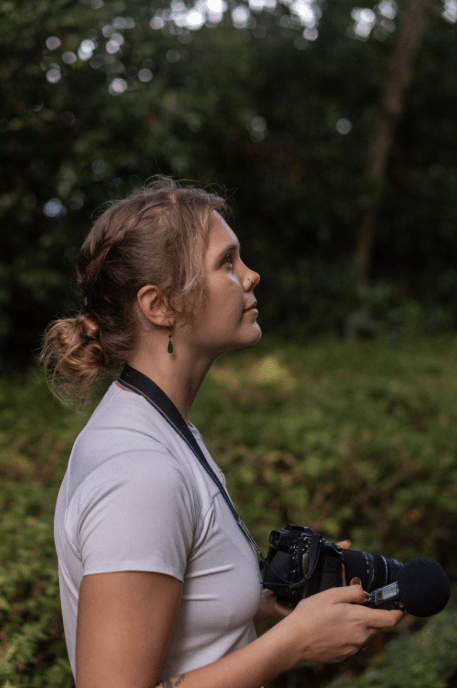
Project Wild supports wildlife conservation and ecotourism, provides group trips, and offers educational resources.
Founded by Wildlife Conservationist and Content creator Connie Needham, on the website, you can find multiple ethical conservation programs, documentaries, and her podcast.
Final Thoughts
These are some of my favourite businesses I have come across, so far, that make travelling responsibly easier. Using these platforms makes it much easier to find places to stay, tours, and activities that incorporate impactful activities.
Rather than this being a static page, I intend to continue adding to it as I find new pages. If you know of any similar businesses or directories, please don’t hesitate to get in touch.
This post forms part of this blog’s sustainable travel directory where you will also find content content creators who discuss sustainable travel. The directory will also shortly be featuring tips on how to make friends as a sustainable traveller.

 Empowering_Ethical_Travel
Leave a comment